The Missing Corner: Where Community Finds Its Way Back
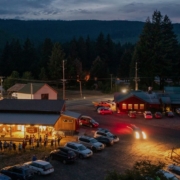
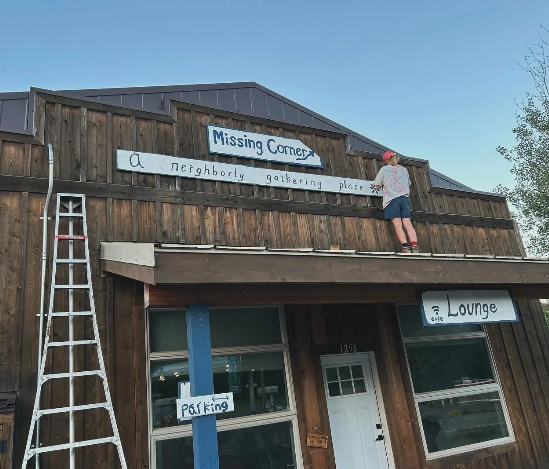
Tucked into BZ Corner, where the pace softens, there’s a building with a literal missing corner—and a metaphorical one, too. But instead of leaving a gap, that absence has become an opening—a gathering place.
Welcome to The Missing Corner, a community-driven space dreamed into existence by Natalie Anderson, where ideas grow like wildflowers and connection is the main currency.
A Space Born from a Personal Need
When Natalie Anderson first stepped inside the building across from her home, the vision arrived fully formed—less like a business plan, more like a quiet knowing.
Postpartum with her second child and transitioning away from a career in scientific research, she found herself craving something deeper—connection, aliveness, and a sense of place. So she built what she couldn’t find. A place for effortless community, neighbor-led creativity and shared knowledge without pressure. “I stepped into the invitation,” she says, “mostly out of a desire to create what I was missing in my own life.”
And just like that, The Missing Corner began—not as a concept, but as a response.
What’s in a Name?
The name is as literal as it is symbolic.
The building itself is missing a corner. It sits on a corner lot in BZ Corner. But beyond geography, the name speaks to something many communities have lost—the corner store, the casual meeting place, the everyday hub where neighbors bump into each other and exchange more than just goods.
The Missing Corner is a nod to that absence—and an attempt to restore it.
A Different Kind of Business Model
Trying to define The Missing Corner in traditional terms is like trying to catch fog in a jar. It slips past neat categories. At its heart, the mission is simple. To make space for what neighbors want to create. Natalie provides the structure—the “container”—while the community fills it. The result is a living, breathing ecosystem of hyper-local entrepreneurship and shared experience.
At the Missing Corner, people can host workshops, share skills, sell goods, test ideas and gather without red tape. It’s small-scale by design.
An “Eddy” in a Fast-Moving World
Natalie describes The Missing Corner as a kind of “slow zone”—an eddy in the current of modern life. It’s a place where the rush softens. Where people linger. Where conversations stretch a little longer than expected. In a world that often pulls people apart, economically, socially and digitally, this space does the opposite. It gently insists on presence. And in that presence, something powerful happens—people remember how to connect.
Built by Neighbors, for Neighbors
Nothing at The Missing Corner is imposed from the top down. Everything grows from the community outward. Some of the space’s most beloved offerings started as simple neighbor ideas. For example, a food pantry, a boat lending library, a little free library, a food truck, a sauna, as well as classes and workshops. Natalie’s role? Think of her as a gardener of ideas—helping seeds take root and grow into something tangible.
Structure Meets Serendipity
While the energy is organic, it’s not chaotic. Natalie creates the framework—the physical space, the systems, the support—and within that, creativity flows freely. Most events begin with someone saying, “I’ve been wanting to try this…” and The Missing Corner becomes the place where that idea finds a home.
One standout initiative is the Learn Local program, an open invitation for community members to share what they know—whether that’s a craft, a trade, or a life skill. It’s part workshop series, part knowledge exchange, and entirely rooted in the belief that everyone has something valuable to teach.
The Quiet Challenges of Growing Something Different
Building something that doesn’t fit into a standard business mold comes with its own set of challenges. For Natalie, the biggest has been patience. This isn’t a “grow fast and scale” kind of venture. It’s a slow build, shaped by real capacity—especially while raising two young children. There’s also the challenge of clarity. When a space can be so many things—a meeting hall, an event venue, a classroom, a community hub—it can be hard to explain in a single sentence. And yet, those who experience it understand immediately.
A Hidden Truth About the Community
One of the most delightful discoveries along the way? “There are so many talented hermits out here,” Natalie says. People with incredible skills, ideas, and passions—just waiting for the right space to share them. The Missing Corner is that space.
Looking Ahead: Growing the Local Economy, One Neighbor at a Time
The future of The Missing Corner is rooted in expansion—but not in the traditional sense. Instead, the focus is on deepening local exchange and connection. Her intentions include expanding the Learn Local program, launching a weekly community garden table with fresh produce and plant starts, providing space for an honor-system sauna, and a shop featuring locally made goods.
It’s all part of a bigger vision—creating systems where neighbors can directly support one another—economically and socially.
A Prototype for Something Bigger
What’s happening in this small corner of BZ Corner is, in many ways, an experiment—a prototype—a reimagining of how business, community, and daily life can intertwine.
Natalie envisions The Missing Corner as a kind of beacon—a living example of how to bring humanity back into commerce, and connection back into everyday life. A place where business supports life, life supports business, and community is the foundation of both.
The Long Game of Community
If there’s one thing Natalie wants people to understand, it’s that building community takes time. It doesn’t follow a straight line. It can’t be rushed. And it requires a willingness to invest—not just financially, but personally—in the place you call home.
Now in its fifth year, The Missing Corner is just beginning to reach a point of sustainability. Not overnight, and definitive not by accident, but through steady, intentional growth.
Staying Grounded
When things get tough, Natalie leans on the people around her—collaborators, neighbors, and those who see the value in what she’s building. Outside of the space, she refuels through movement and expression—public speaking, time outdoors, dancing, sunlight.
Finding What Was Missing
In the end, The Missing Corner isn’t just about a building, but about filling a gap many of us didn’t realize we were carrying—a quiet longing for connection, for belonging, for something real. And in BZ Corner, that missing piece is slowly, beautifully, being restored.