
Heartsong Living Arts
Tucked into the natural beauty just outside of White Salmon, Heartsong Living Arts offers a different kind of learning experience, one rooted in nature, creativity and connection. With the Columbia River Gorge as an extended classroom, Heartsong encourages children to explore, create and learn through the rhythms of the seasons and the world around them. We caught up with the Heartsong founder, Stephanie Seliga-Soulseed, to learn more about their approach, their connection to the White Salmon community and what makes this local program unique.
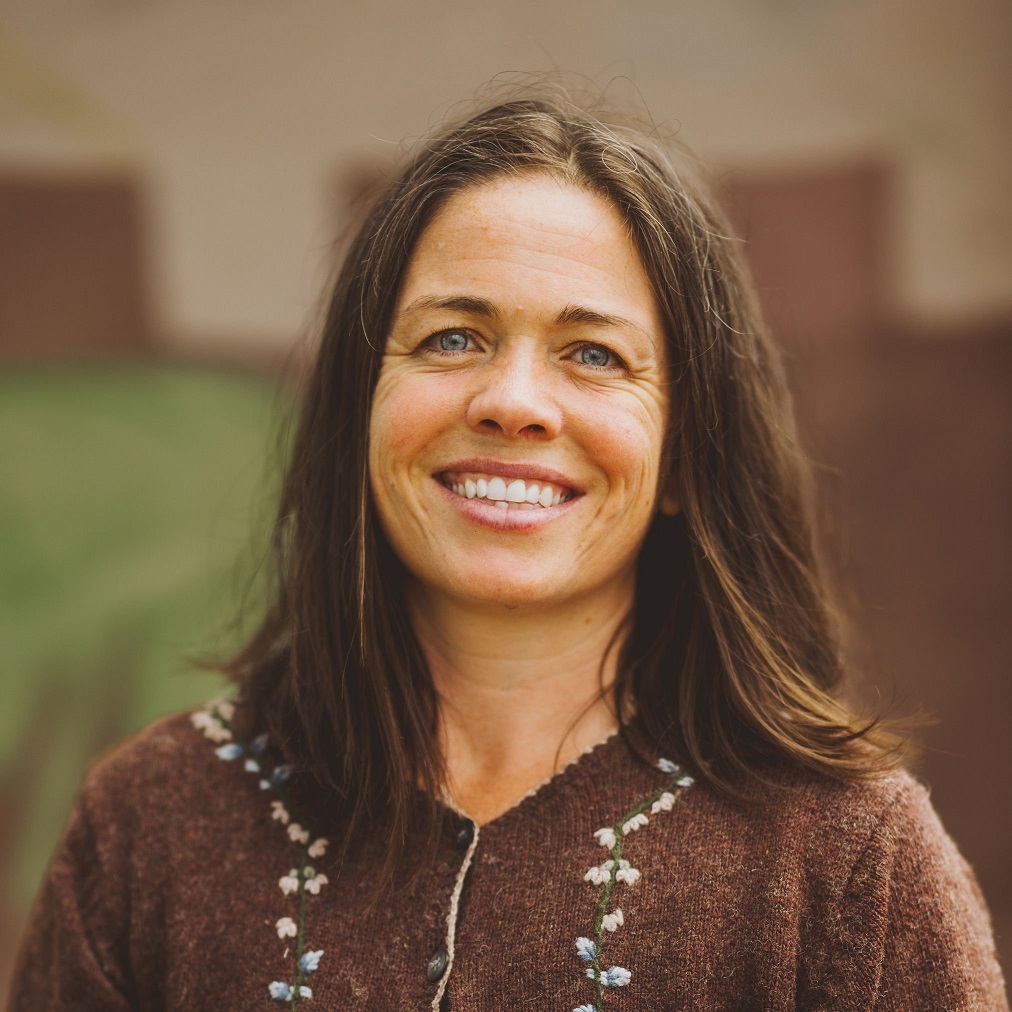
Stephanie Seliga-Soulseed
If you had to describe Heartsong to a family who had never heard of it, how would you describe it in your own words?
It depends on the vibe of the family I’m talking to. We are not a place to drop your kids off and say goodbye. We are a learning village. It is a place where families come together in service of the greater community to educate the whole child and really, to bring something alive in the adult. That parenting and education are together, coherence between home and school makes whole people. Together we practice and learn manners, social skills, and kindness, alongside reading, writing, math and science, in a mixed age setting where the entire community makes it happen.
What was the original inspiration for creating Heartsong?
I had intended to open a preschool/kindergarten, and argued with my own higher power about it. We moved here in 2019, with the intention of doing seasonal festivals before opening our programs, then Covid hit six months before I had planned to open. We opened outside with a canvas tent as our classroom. People with first, second and third graders were calling me for their kids to just get time out of the house, but those grade schoolers were ruining the vibe of my preschool. They were hungry for more, so I brought in a veteran Waldorf teacher with thirty years of experience who was out of work, thanks to Covid. She did two days a week of curriculum, and it was beautiful.
Was there a particular moment, experience, or realization that made you think, “This is the kind of education children need”?
I think the moments happen all the time. When the children are going down to the creek for lunch recess, or learning math by picking leaves that have the same number of points as whatever number we’re working on. When a parent comes in to teach a lesson to a class that their child is not in. There are so many moments of “this is where education expands to in the future.”
The mixed-age classroom is so profound. We oscillate through the day with everyone being together and then in similar age groups and then back with the whole group. It’s not what I grew up with, but it just seems so much more human. And they learn so much more about how to be with other people and about empathy than they would in a class with just children their own age.
What does the name “Heartsong” mean to you?
I always think of a prayer. Someone singing a prayer, like a good gospel or an old church song. As that one person sings, others join until there are harmonies and melodies and the energy of the space changes. A good song like that puts something good into the future. It changes the moment and bring people together. It opens our hearts and minds in service of something good.
The website describes Heartsong as a nature-based learning community where children learn through relationship, rhythm, imagination, and meaningful work. What does “nature-based education” actually look like on an ordinary day at Heartsong?
It means we are outside for morning circle, movement, observation and gardening every day. We hunt for lessons in the garden, the creek, the forest, the weed patches– and have real life experiences along with the seasons.
You talk about nurturing the whole child — head, heart, and hands. What does that look like in practice?
Waldorf education is from the whole to the parts–we begin with the biggest parts and then move down to smaller pieces. Our botany lesson, for example–we begin outside with the plants, we look at the whole environment then we move into specific plants, then deeper into its parts.
Nurturing the whole child is the same. We look at the child as a beautiful essential part of a greater whole. They do not come to us from nowhere, they come from a lineage, a family, a community, living in an ecosystem. We see their mind not just as an empty thing to fill, but as an integrated piece of their body. We consider their personal lives and their history. We are not here to fill anything, but to remove barriers to learning. We do this by nourishing their senses, by giving them belonging and safety, and by bringing them concepts and practice in ways that feel good to them.
How do creativity, storytelling, music, handwork, cooking, gardening, building, or other practical skills become part of learning?
Honestly, I don’t really know where one ends and the other begins. That’s kind of the point. We don’t say, “Okay, now we’re going to do the creative part.” The whole thing is creative.
You can learn fractions by baking bread. You can learn geometry by building something. You can learn botany by gardening. You can learn writing by telling a story and then writing it down. You can learn cooperation by building a shelter together. You can learn patience by knitting. You can learn math through rhythm and music.
And children need to make things. They need to use their bodies and see that they can take something from an idea in their head and make it into something real with their hands.
How does the changing season influence what happens at Heartsong?
A lot. We try to let the seasons tell us what is happening. We don’t want to teach spring to children while everything outside is telling them it is winter.
There is a rhythm to the year, and the children feel it. What we eat, what we grow, what we work on, the stories we tell, the songs we sing, what is happening in the natural world. We are paying attention.
The seasons give us structure without us having to manufacture one. The children know that something is coming. They know what comes next.
Are there particular seasonal traditions or festivals that are especially meaningful to your community? Why?
Our festivals are really important because they bring the whole community together. We have Michaelmas, Lantern Walk, Winter Spiral, Candlemas, and Mayfaire. Some of these traditions come from Waldorf and European traditions and some are things we have made together over time.
I love that the children aren’t just learning about a tradition, but participating in making it happen. They make lanterns, and beeswax candles. They sing and help decorate. Parents bring food. People show up. There is something different about celebrating together rather than just reading about it.
Is there a favorite Heartsong tradition that families look forward to every year? Tell us about it.
Probably the Lantern Walk. There is something really beautiful about being together as the light gets dark, carrying these little handmade lanterns through the woods while singing.
But I also really love Mayfaire because it has become this bigger community expression. It isn’t just a Heartsong event anymore. It is a gift we get to make for the Gorge. There are hundreds of people there, with children running around–music, flowers, food, art, play.. It feels like the kind of community gathering I want my children to grow up knowing is possible.
Walk us through a typical day at Heartsong from the moment children arrive until they go home.
The day has a pretty strong rhythm, but isn’t rigid. Children arrive, they play, we jump rope. Every day I look each child in the eyes and say good morning with a handshake and every afternoon I look them in the eye again and shake their hand to say goodbye. We come together for morning circle and there is movement, singing, verses, eurythmy, then we break into garden groups and do the memorization and movement portions of our main lessons in smaller groups.
After that, we move into the classrooms for the main lesson. This is where we do the deeper academic work. Depending on the age and the block, that could be math, science, literature, geography, or history. But we are usually moving our bodies and engaging our hands and imagination here too.
Then lunch and recess, and certain times of year, the creek. The afternoon has music, art, handwork, reading, projects, practical work and more time outside.
And then we clean up together–the classroom belongs to all of us, so we take care of it together.
What are some of the favorite activities or rituals among the children?
The creek. Always the creek.
Building things, making fires, cooking, gardening, carving–anything where they get to actually do something. They love stories. They love games. They love when we let them be a little wild.
I think some of their favorite things are the things we adults might overlook — sitting together eating something we made, finding a weird bug, making up a game, watching a salmon swim upstream. Those are the things they remember.
How do you support different learning styles, personalities, and developmental stages?
We try really hard not to make the child fit the curriculum. We try to make the curriculum alive enough that there are lots of ways into it.
Some children need to move. Some need to draw. Some need to hear something ten times. Some need to do it with their hands before they understand it in their heads. Some need something more challenging. Some just need more time.
The mixed-age classroom helps with this too. Children aren’t all expected to be in exactly the same place at exactly the same time. They have room to be themselves while still being part of the whole.
How do you balance allowing children space to explore with providing structure and guidance?
Rhythm. I think rhythm is the answer to a lot of things.
Children need to know what is coming. They need boundaries. They need adults who are actually willing to be adults. But within that, there needs to be a lot of room.
We aren’t trying to control every minute of a child’s experience. We give them a strong container and then let them live inside it. Sometimes that means letting them get muddy or make a mistake or try something that doesn’t work.
Freedom without a relationship isn’t really freedom. And structure without freedom isn’t really education.
What is different about the role of the teacher or guide at Heartsong?
The teacher is not just the person who knows the answers.
We are creating an environment where learning can happen. We are watching and listening. We are modeling how to be a human being, and paying attention to the developmental stage of the child and asking, “What does this child need from me right now?”
And WE are learning too. I think that is important. A teacher who thinks they are finished learning is probably not the teacher I want around my children.
What qualities do you look for in the adults who work with children here?
Warmth. Humility. Curiosity. A genuine love for children.
I want adults who can hold a boundary without humiliating a child. Adults who can say, “I don’t know,” and then go find out. People who notice beauty. People who are willing to work hard and get dirty. People who will sing and move a lesson.
And I want people who understand that education is relational. You can’t really separate who you are from how you teach.
What questions do parents most often have when they first discover Heartsong?
Usually, “But will my child learn enough?” Which is a totally reasonable question. They want to know about academics, reading, math, high school, college, all of that. And I get it–we are asking families to trust something that can look very different from what THEY grew up with.
So we talk about academics, but we also talk about what kind of humans we are trying to help their child become. Because I don’t think those things are separate.
What concerns or misconceptions do families sometimes have about a nature-based or Waldorf-inspired education?
That it is somehow less academic, or that children just play all day. We play, absolutely–children should play. But there is a tremendous amount of academic learning happening through that play and through practical work and through stories and movement.
There can also be a misconception that Waldorf means one very specific thing and that every Waldorf school has to look the same. It doesn’t. We are deeply inspired by Waldorf education, but we are also responding to this place, these children and this community.
What would you say to a parent who is intrigued by Heartsong but isn’t sure whether it’s right for their child?
Come visit. Don’t take my word for it–come sit in the room, walk down to the creek, watch the children. Talk to the teachers–talk to another parent. I think you will know pretty quickly whether it feels like your people.
Where do you hope Heartsong is five years from now?
I hope we are deeply rooted. I don’t necessarily mean huge. I want the buildings to be beautiful and functional. I want the land to be cared for. I want all our programs to be really strong. I want children to be able to move through Heartsong and leave with a deep sense of who they are and what they have to offer. And I want the adults to feel like they belong here too.
I would love for Heartsong to be a place where the Gorge knows, “If you want to know what community-based education can look like, go see what they’re doing at Heartsong.” I think more than anything, I want to see heartsong in the public schools. Meeting the whole child and supporting the whole family–being something that all children in our community have access to. Also, through the Living Arts Alliance I would like to see Heartsong help other inspired educators continue to create models of Waldorf education in rural communities. With the proliferation of technology, we need more ways to preserve our humanity and raise fully embodied adults.
What are you most excited about for the coming school year?
The campus. Watching this place become real. We are building a middle grade school space, continuing to develop the garden and the land, and growing our programs. I’m excited about having more adults with different gifts working with the children. But mostly I am excited about the children. They are growing so fast. Every year I think, “Oh my gosh, look at who you are now.”
Are there programs, traditions, or ideas you would love to develop in the future?
So many. I would love to see more intergenerational learning. More community classes, more opportunities for parents and adults to learn alongside the children, more land-based education, more art and craft, more ways for alumni to stay connected.
I really want to create a series of classes that all Gorge children have free access to that teaches about fire in a holistic way. About our relationship with fire as human beings, fire in the Gorge, fire in the forest, fire’s life giving capability, how to build and tend fire–these lessons belong to all of us and make for a more resilient volunteer fire team, and a more resilient community. From there we’d do a water and fish, and an air and earth themed program.
Additionally, I would love to see a real learning village develop here over time–not just a school, but a place where education, land, community and culture all overlap.
What would you love more families in the Columbia River Gorge to understand about Heartsong?
That this belongs to all of us. You don’t have to send your child here to be part of what we are doing. You can come to a festival. You can teach a class. You can help in the garden. You can come sit by the fire. You can bring an idea.
I think we are hungry for places where we actually know each other again. Where children know the adults in their community and adults know the children. Where we are not just outsourcing everything to institutions.
That’s what Heartsong is trying to be. A heartfelt practice of remembering how to do this together.

