Rooted in the White Salmon Valley: How Clusterflock Farms Grows with Land, Season, and Community
Tucked into the White Salmon Valley, Clusterflock Farms is a living expression of stewardship, creativity, and community. What began as a long search for land evolved into a regenerative farm rooted in flowers, vineyards, and deeply held values. Guided by the rhythms of the Valley and shaped by collaboration, Clusterflock Farms reflects what’s possible when you listen closely to the land and the people around you.
What first inspired you to start your business here in the Columbia Gorge?
The short answer is simple: look around.
The longer story is that my wife and I spent nearly six years searching for land. We started in California, where we lived at the time, but quickly realized it wasn’t right. When we turned our attention north to Oregon and Washington, I learned what so many people outside the PNW don’t know: east of the Cascades is a completely different world.
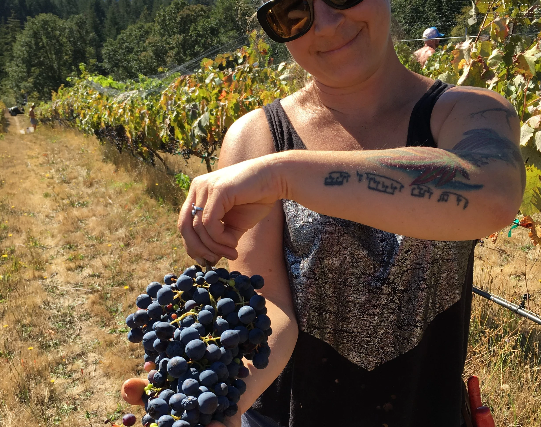
We had a very specific vision. Mixed oak and evergreen forests, fertile pasture, real seasons without the humidity, and water on site. We were also seeking a wine region with affordable agricultural land where we could build a sustainable, regenerative farm. Just as important, we needed a place that felt safe and affirming for our LGBTQIA family.
When we first visited The Gorge in 2014, it felt undeniable. We called it the land of waterfalls and rainbows. Within eight months, we found our place, packed up our lives, and moved.
The Columbia River Gorge felt like the New Zealand of the U.S. Once we saw it, we couldn’t unsee it.
What did the early days of the farm look like?
Chaotic, humbling, and full of learning. We were lucky to find friends early on who helped us understand what rural life in the Gorge actually requires. One of the first lessons was preparing for winter long before it arrives.
Coming from city life, I was used to quick results. Trying to impose that pace on 25 acres was defeating. I had to learn patience. Working with time instead of force slowed me down enough to truly observe the land and our needs.
That shift changed everything. Instead of trying to control the farm, I learned to listen.
Stewardship rather than colonization changed how everything grew.
As a woman building a business in a rural, tourism-driven region, what challenges surprised you?
Farming and wine are historically male-dominated industries, and being taken seriously was an uphill battle. Despite experience and education, I was often overlooked or patronized. It was exhausting and isolating.
Things have improved significantly over the past decade, and I’m grateful to see more women in these spaces. When we leaned more fully into flower farming, everything changed. The flower world is driven by collaboration and generosity. I finally felt like I had found my people.
Flowers didn’t replace the vineyard, but they transformed the farm. They even made the grapes better.
Flowers opened doors I didn’t know existed and reignited my purpose.
How has community shaped your journey?
Without community, we wouldn’t exist.
AniChe Cellars showed us how to build a values-driven business without sacrificing integrity. They modeled what it looks like to stay small by choice, stand up publicly for what matters, and center family and friendship.
Our children’s school community has also become a cornerstone. It truly feels like raising kids in a village where safety, acceptance, and care are shared.
Community is the reason we’re still here.
How do you balance seasonal work with rest?
Balance is rarely static. Life swings. Farming makes you beholden to light, weather, and season. Winter offers a quieter rhythm where planning, dreaming, and rebuilding take center stage.
The farm rests, and so do we, in our own ways.
What does success look like now?
Success feels softer now. Still driven, still bold, but clearer. Justice, love, and community take up more space in how we define growth.
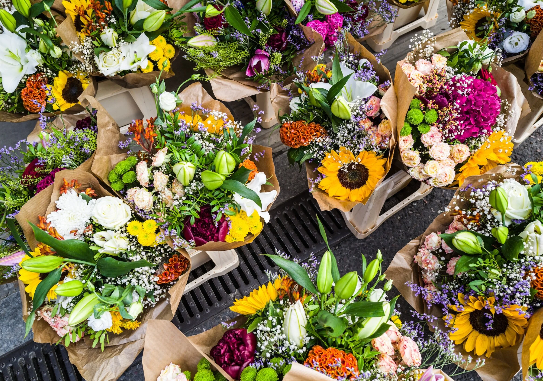
Flowers now lead the story, with the vineyard as a steady foundation behind them. Both are essential, but blooms have my heart right now.
Success isn’t louder anymore. It’s steadier.
What advice would you give to someone dreaming of starting something land-based in the Gorge?
Find your people. Build community. Be uncomfortable. Speak your truth. Fail often and keep going.
What’s next for Clusterflock Farms?
The next chapter is about inclusion, joy, and flexibility.
- Crush the Patriarchy, the beloved grape-wrestling fundraiser, returns this September
- Launching À La Carte florals for weddings, events, and celebrations of life
- A redesigned Bouquet Subscription, allowing month-by-month signups from April through September
I dream of a farm where queer-friendly and family-friendly spaces coexist.

